
Introduction: The Hidden Cost of Color in the Textile Industry
Of all the processes involved in garment manufacturing, textile dyeing emerges as one of the most problematic and polluting. This process is a voracious consumer of resources and a massive generator of toxic effluents.
It is estimated that the textile industry uses more than 93 billion cubic meters of water annually, a significant portion destined for dyeing. The process is responsible for up to 20% of industrial water pollution worldwide.
Historical Context and the Textile Water Crisis
The Wet Process Problem
- Excessive Water Consumption: 50-150 liters per kg of dyed fabric
- Chemical Contamination: Unfixed dyes, heavy metals, salts
- Energy Expenditure: Heating water to 60°C-130°C
Dope Dyeing (Mass Coloration) as a Solution
Unlike traditional dyeing, which colors the fiber after formation, Dope Dyeing incorporates the pigment directly into the molten polymer solution before the fiber is extruded.
The Step-by-Step Process
- Polymer Preparation: The base polymer is melted to form a viscous solution.
- Pigment Addition: Color pigments are added to the molten solution.
- Extrusion: The colored mixture is extruded to form filaments.
- Solidification: The filaments cool, resulting in already-colored fiber.
Technical and Quality Advantages
| Characteristic | Traditional Dyeing | Dope Dyeing |
|---|---|---|
| Color Location | Fiber surface | Within molecular structure |
| Color Fastness | Good, susceptible to abrasion | Excellent, maximum resistance |
| Water Consumption | High (50-150 L/kg) | Almost zero |
| Energy Consumption | High | Low |
Quantifiable Sustainability Impact
Zero Effluent Contamination
When using Dope Dyeing, the colorant is consumed almost 100% within the fiber, meaning the coloring process generates no contaminated liquid effluent.
Market Analysis and Future Projections
The waterless dyeing technology market was valued at approximately $348.9 million USD in 2024 and is projected to grow at a CAGR of 9.2% between 2025 and 2034.
The Role of the Circular Economy
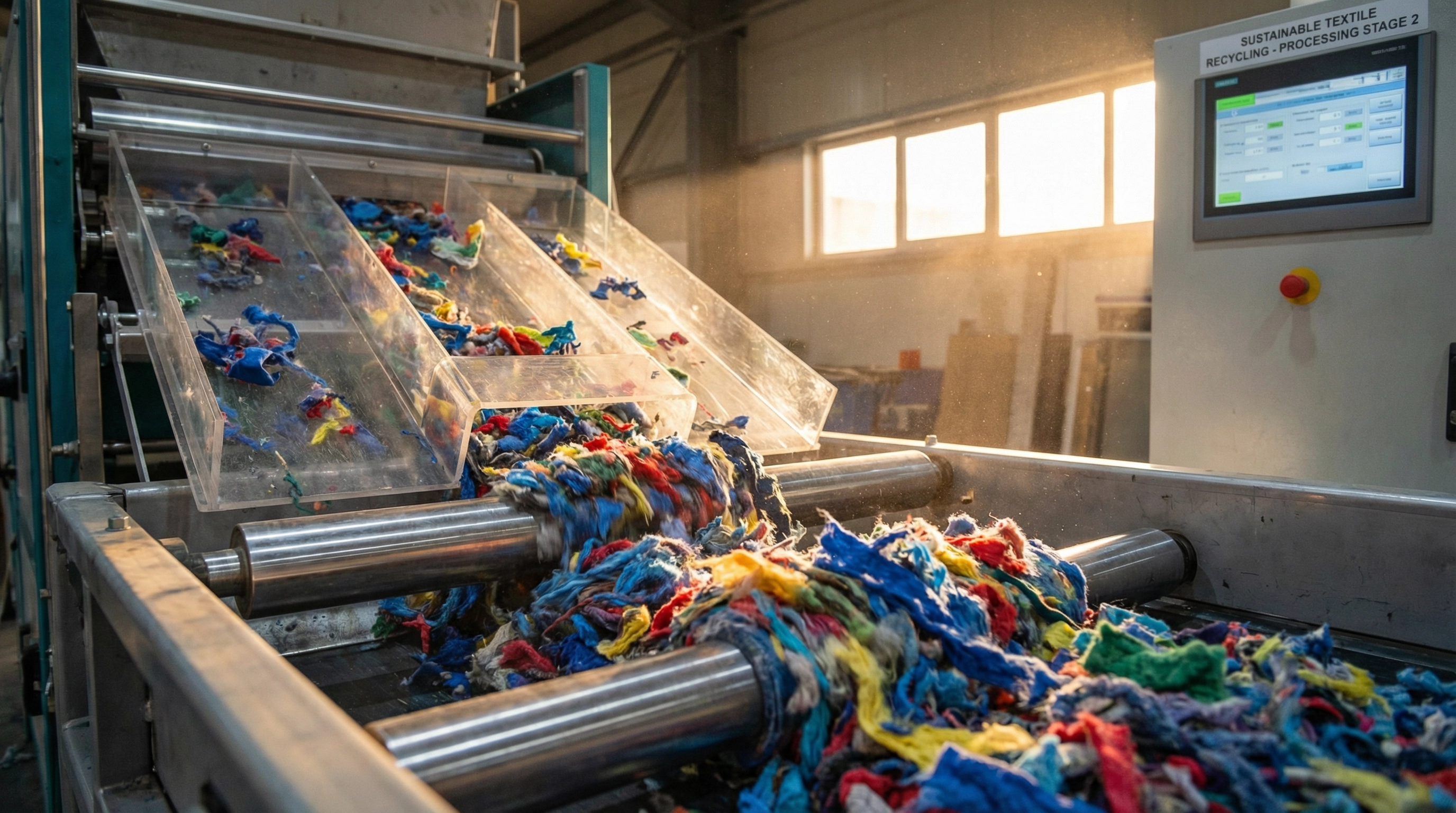
Dope-dyed fibers, especially recycled polyester (rPET), maintain their color and quality through multiple recycling cycles.
Beyond Dope Dyeing: Other Strategies
1. Supercritical CO2 Dyeing
Uses CO2 in a supercritical state as a solvent for dye. Uses no water at all and the CO2 is recycled in a closed loop.
2. Naturally Colored Cotton
Cotton is grown so that its fibers are naturally colored (brown, green), eliminating the need for dyeing.
3. Greige Fabrics
Using fabric in its raw state, undyed and unbleached, celebrating the inherent color of the fiber.
Conclusion: The Colorless Future Is the Brightest
Avoiding traditional dyeing is one of the most powerful levers the textile industry has to mitigate its environmental impact. Dope Dyeing technology is not just an alternative; it is a superior production standard.
"The next time you choose a fabric, remember that the most sustainable color is the one that never needed a dye bath."