
Introduction: Two Paths to Circularity
In the world of textile recycling there are two main methodologies that compete and complement each other: mechanical recycling and chemical recycling. Understanding their differences is essential for choosing the most sustainable solution.
Mechanical Recycling
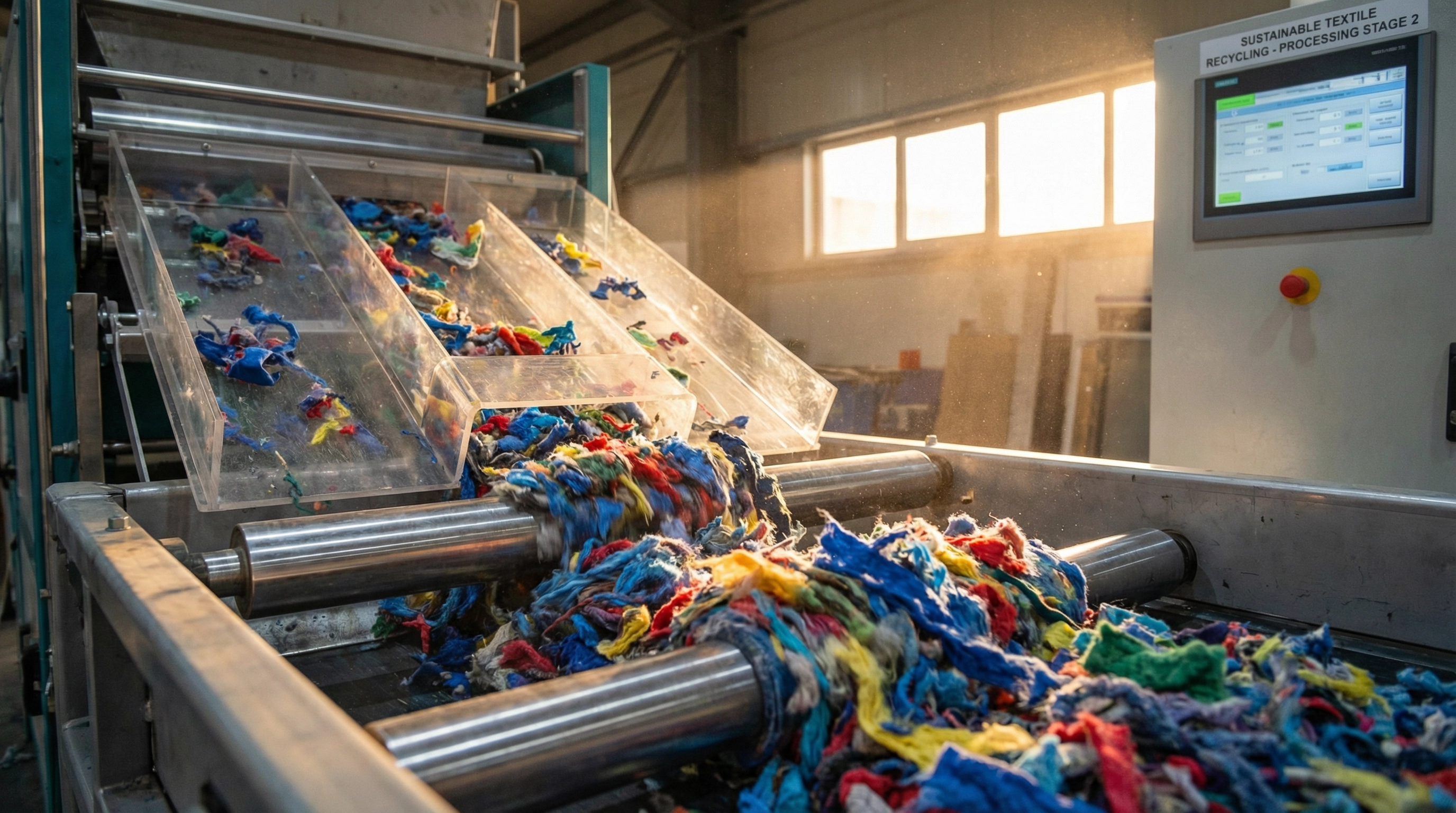
The mechanical process involves physical shredding of textiles to recover fibers:
- Mature and economical process
- Ideal for mono-material materials
- Reduces fiber length
- Requires color sorting
Chemical Recycling
The chemical process breaks down polymers at molecular level:
- Allows processing fiber blends
- Produces virgin-quality fiber
- Higher capital investment
- Lower environmental footprint per cycle
98%
Chemical Recovery
75%
CO2 Savings
Sustainability Comparison
| Aspect | Mechanical | Chemical |
|---|---|---|
| Fiber quality | Reduced | Virgin |
| Energy consumption | Low | Medium-High |
| Blend handling | Limited | Excellent |
| Cost | Low | High |
Conclusion: The Best Option Depends on Context
Both methods have their place in the circular economy. PrecisionTex primarily uses mechanical recycling for pure fibers, optimizing color and composition sorting.